A lazy, high-fat, high-carb, high-protein dinner

Homer Simpson
Me, yesterday

I have no particular reason to be eating high-fat, high-carb, high-protein dinners. I am not in training for a marathon (and even if I were, I don’t think anyone recommends high-fat meals, unless it’s to cheer you up after running 15 miles in the rain). But last night we found ourselves with almost no food in the house and having eaten takeaway twice over the weekend, we didn’t quite feel able to do it again, so we were forced to improvise. This supper, whilst not the healthiest ever, has the advantage of being quick, yummy and so easy to make that you’ll barely notice you’ve done it.

Ingredients (serves 2)

One small packet of smoked salmon (or half a big packet left over from the weekend)

Half a packet of soft herby cheese, the kind that comes in a roulade (like Boursin, although we used the Co-op’s own-brand version)

Some milk

Enough pasta for two people – fusilli or farfalle work best, but whatever you have

3-4 spring onions (or a handful of chives)

A little bit of lemon zest

Method

Boil pasta as per the instructions. Meanwhile melt the cheese in a non-stick pan over a very low heat, adding a splash of milk to thin it whenever it gets too gloopy. Cut or tear the smoked salmon into smallish pieces and add it to the melted cheese when the pasta is ready. Drain the pasta and coat it with the cheese and salmon sauce. Chop the spring onion into small pieces and sprinkle it over the top with the lemon zest to serve.

The whole thing takes about ten minutes, or however long it takes you to boil pasta.

I haven’t been doing much cooking recently, but this weekend we finally got around to spending our wedding vouchers on, among other things, a blender and a griddle pan,  both of which should arrive this week. So I plan to spend the summer experimenting with cakes, soup and grilled steaks. I will report back.
Stephen Hendry

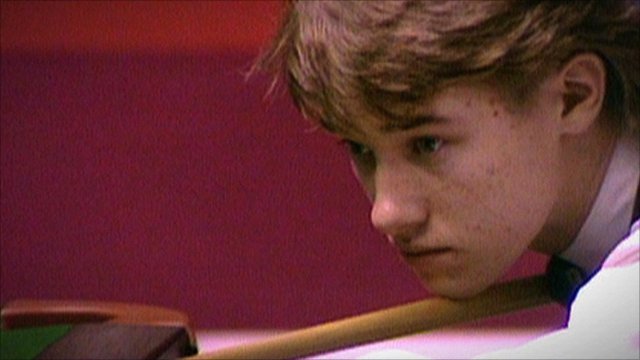
Young Stephen Hendry

I don’t want to talk about Stephen Hendry like he’s dead, which is what the media seem to mostly be doing. But when somebody brilliant stops doing the thing they’re brilliant at, it’s hard not to get a bit wistful. Last night, after seven world championships, 36 ranking titles and 775 competitive century breaks, Stephen Hendry announced his retirement from snooker following his defeat by Stephen Maguire in the quarter-finals of the world championship in Sheffield. He’d had a brilliant start to the tournament, making a maximum 147 break on the opening day against Stuart Bingham and going on to defeat John Higgins 13-4  in the second round, but it all went a bit to pot (sorry) against Maguire, and Stephen ended up losing 13-2.

It is, of course, Stephen’s right to retire anytime he likes, and I doubt he’ll need to join the dole queue anytime soon. But I am a bit sad that he made the announcement so quickly after losing his last game, because it makes it seem like the two are connected, even though he says not. It also takes something away from Maguire’s victory (“you killed Stephen Hendry, you bastard!”), and casts a shadow over the rest of the tournament, because all of a sudden nobody’s as interested in the players who are still involved.

Every snooker pundit ever likes to remind us that Stephen Hendry is – or now, was – The Best Snooker Player Of All Time™, and although my heart belongs to Ronnie, they are right. (Ronnie, you will recall if you have ever watched any snooker, is The Most Naturally Gifted Player The Game Has Ever Seen™, which is different.) Where Ronnie is fiery and unpredictable, Stephen was always calm and reliable. Ronnie was the best and he knew it: Stephen always came across as humble, even during the nineties when he was comfortably outplaying everyone else in the world.

If Ronnie O’Sullivan had announced his retirement moments after crashing out of a tournament, nobody would be surprised. What am I saying, “if”? He’s done it, plenty of times. I am half-hoping that Stephen doesn’t mean it, the way Ronnie never did, but I know he probably does because you can tell from his snooker as well as from the way he talks that he is a thoughtful and measured person who doesn’t say things he doesn’t mean.

So we probably won’t ever see him making another 147 at the Crucible, but I think in years to come we’ll remember not that he retired mid-tournament, but that he retired barely a week after making his third maximum there and giving snooker lovers everywhere yet another moment to remember. Thank you, Stephen, you really were the best.

Wednesday Week

Today I would like you to go and read Wednesday Week, my friend Sweeney’s blog. He is the funniest writer I know, which is why I have enlisted him to help me with my Super Secret Project. We have been working on the Super Secret Project for quite a long time, but that’s OK because neither of us is the dynamic go-getter type, really. We’ll finish it one day, and then – well, then we’ll probably leave it sitting in a metaphorical drawer for six months.

Anyway, Wednesday Week is quietly brilliant, just like its author. Start at the beginning and read it all, it’s worth it.

Olympic rage

I have spent seven years defending the London Olympics to everyone who thinks they are a terrible waste of money and effort. “The Olympics”, I have said more than once, “are the only time when the nations of the world come together in an activity which isn’t a war. They represent the best of human society and endeavour, and we should celebrate them”.

I still think that, but Londoners have been exposed to an increasing amount of games-related publicity in the last few weeks, and I think I’ve finally snapped. It’s not the solemn entreaties to walk or cycle instead of taking public transport this summer (although unless you’re going to refund some of my £160 monthly travel costs, Boris, you can fuck right off with that suggestion); nor is it the utter mess they made of ticketing (although I’m separately angry about that). No: the reason my stomach clenches every time I see one of the posters is the unutterably hideous font they’re using to promote the event.

Look at it:

London Olympics text

It looks exactly like the kind of design I used to come up with, freehand, when as a teenager I briefly thought that I might like to be a graphic designer. It was the fact that my fonts looked like this that made me realise I wasn’t good enough. It’s ugly, it’s difficult to read, and most of all it looks half-finished, like a placeholder that’s being used as a joke to remind the designer to replace it with a proper font before he sends the proofs over.

But it’s not a joke, or a placeholder: it’s the font that somebody, somewhere – possibly, even, a committee – has decided should be used to showcase British design talent on the biggest, brightest stage of them all. I feel ashamed every time I look at it, and you know what? I could absolutely have done a better job.

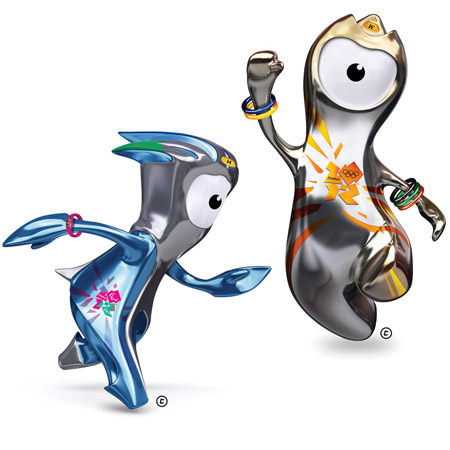
(Also terrible: the logo, which I have ranted about elsewhere, and the mascots, which are so bizarrely awful that I almost can’t bring myself to mention them at all, but just for comparison, here is Misha, the mascot of the 1980 Moscow Olympics. Misha, for the avoidance of doubt, is a bear:

Misha the Olympic bear

…and here are Wenlock and Mandeville, the mascots of the 2012 London Olympics:

wenlock and mandeville

Wenlock and Mandeville are, uh, they’re…aliens? In…cycle helmets? Cute! I want one!

Still, at least they aren’t named after a small-town law firm. Oh.)

Bram Stoker and the Lyceum Theatre

Bram Stoker

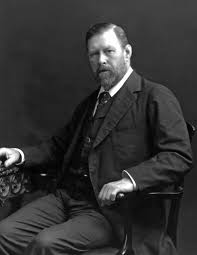
Last Friday was the hundredth anniversary of Bram Stoker’s death, and to mark the occasion the Dracula Society (I know, I had no idea either) held a celebratory event at the Lyceum Theatre, to which I was lucky enough to be invited as a representative of The Public Reviews, a website which does what it says on the tin.

It all lasted about an hour, and most of that was people standing around drinking, so I had to be creative in order to get a thousand words out of it, but it was worth it because now I really want to re-watch all the old Dracula films, and I can’t think of a better way of spending what promises to be another wet weekend.

The piece is here.

John Renbourn

Wizz Jones, Robin Williamson and John Renbourn
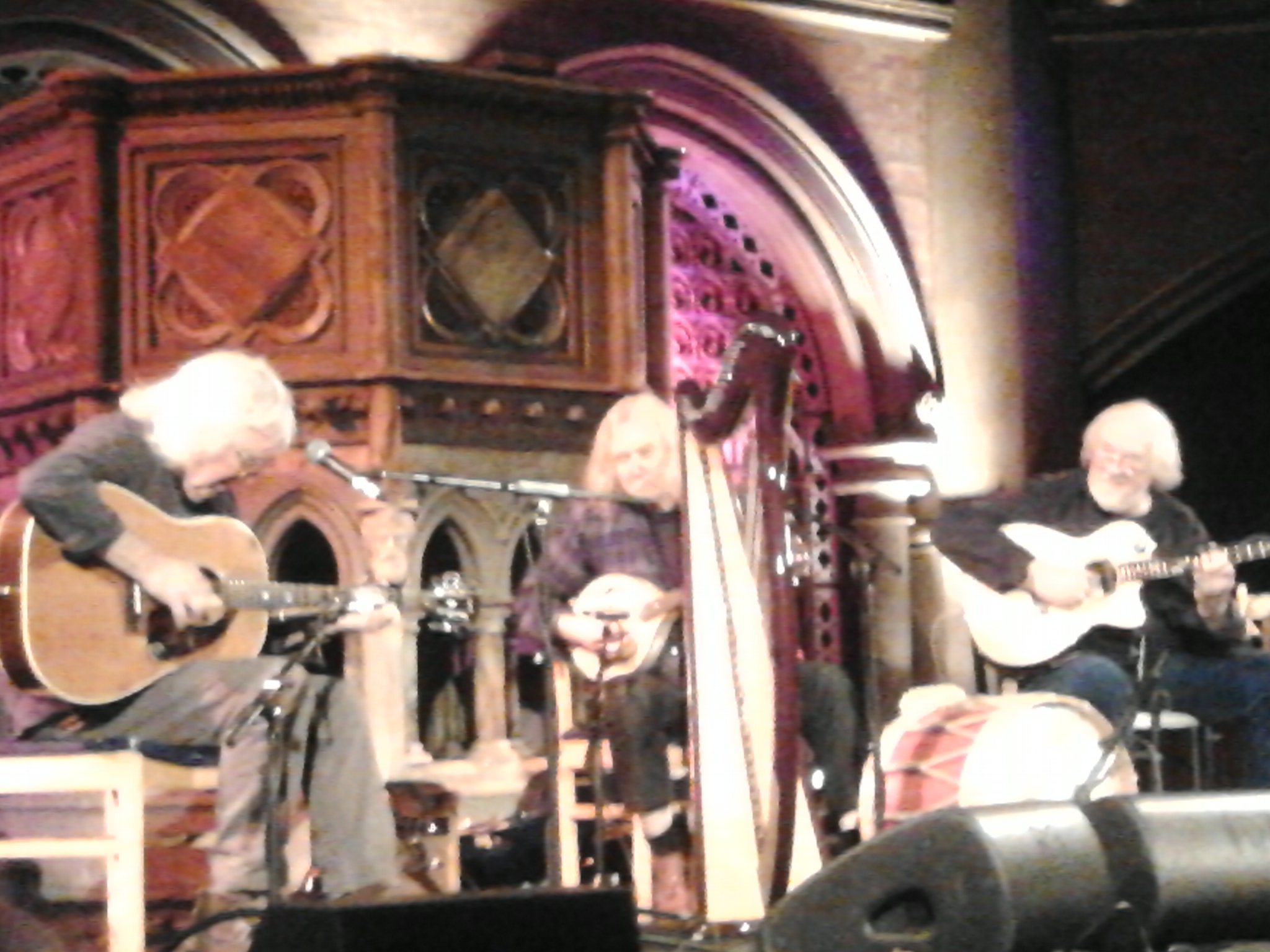
L-R: Wizz Jones, Robin Williamson, John Renbourn, on a crappy phone camera

When Bert Jansch died, I said here that I was going to make a list of the musicians I wanted to make the effort to see while I still had the chance. I never made the list, partly because it’s a bit morbid to try and come up with a list of musicians who you think might die soon, but mostly because I am lazy and don’t follow up on my promises.

But someone who would have been on the list, because he was a contemporary of Jansch’s, was John Renbourn, who I am delighted to say I saw perform on Saturday night at the Union Chapel, and my goodness, it was terrific. At the Union Chapel you can sit about twelve feet from the performers, so we did because when you are watching guitarists, you want to be able to see their fingers. John didn’t speak much (he had raconteur extraordinaire Robin Williamson, formerly of the Incredible String Band, to do that for him), but he made his guitar sing like a young Beach Boy, and seemed to do things with it that oughtn’t to have been physically possible. I am not a guitarist, but I had one seated either side of me, and they both agreed afterwards that there were notes in there which, even with three people playing (Wizz Jones was the third), seemed to come from nowhere at all.

There is music which is designed to take you outside of yourself – prog rock, trance, punk – and there are musicians who can transport you to somewhere entirely new (I always think that seeing Bobby McFerrin perform live is the closest thing we have to evidence for the existence of a higher plane). And then there is music which takes you deep down inside of yourself, and for me that is acoustic blues and folk guitar. Sitting in the Union Chapel with a cup of tea and my coat still on because try though they might, it is not a well-heated space, I seemed to live my life again in a series of images and memories which the music evoked. Not because they were songs I knew – less than half of them were – but just because the very sound of them spoke to a half-hidden part of me, where unremembered thoughts and feelings live.

I don’t think this is because I was a blues musician in a previous life, or because the music invokes supernatural presences: I think it’s because this is the music I heard before I heard anything else, and what it arouses in me is probably more or less the same set of feelings that any sudden sharp sensory link to my early childhood would, but that doesn’t make it any less interesting.

I count myself lucky to have been brought up by this music, because there is something timeless about it – I joked on the night that we were the youngest people there but we weren’t, not by a long way – and I’m not sure it would be the same if my earliest musical memories were of the Village People or Boney M. There are other types of music which transcend their time, of course – jazz, classical – but their time was earlier. Davy Graham, Bert Jansch and the three white-haired geniuses I saw at the Union Chapel were living, breathing artists when I first heard them, all the more so to me because the way I first heard them was not on vinyl or cassette but on wood and steel, tapped out by my dad on his own guitars. This music made me, and it was a privilege to be able to see it first-hand.

I didn’t record any of the show, because that would be rude, so here instead is a lovely video from the olden days.

Three photos

Here are three things I have seen this week.

Thoughful graffiti in Dublin:

Burn the bankers. Actually.

A friendly notice in a cafeteria, also in Dublin:

Enjoy!

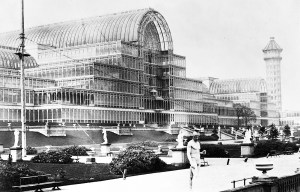
A toilet called “Laura”, in Crystal Palace:

Why would you give a girls' name to a lavatory? Why?


The worm that turned

Out running this morning, I noticed a worm apparently stranded on the pavement, which was wet overnight but had dried out in the morning sun. The first time I went past him, I swerved to avoid him. The second time I thought, he’s going to dry out if he stays there – so I very gently picked him up with a twig and moved him to the grass at the side of the road.

The third time, he was determinedly making his way back to where he’d started. Here he is on my fourth pass, almost back in the middle of the pavement:

a wom

He clearly knew exactly what he was doing, and I had interrupted and made him have to start all over again. I felt a bit embarrassed.

Beautiful things

a diamond
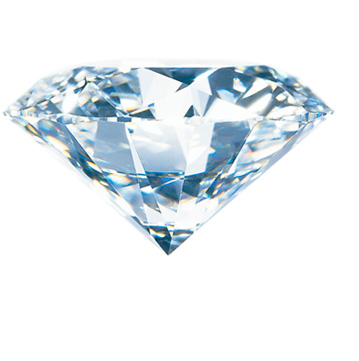
A girl’s best friend

A change is as good as a rest, which is why I felt after my two-week dash around the Americas as though I’d been away for a month. It’s also why you should leave your office at lunchtime, even if it’s just for five minutes, to go outside, smell the air and have a look around. Your eyes and brain will thank you for it.

I am especially lucky, because if I leave the office for five minutes I find myself in Hatton Garden, home to dozens of jewellers of every stripe, all of whom display a tempting selection of wares in their windows. After a morning of spreadsheets and wireframes I can feast my eyes on the finest jewels in the city, and come back to the office boosted and sprightly and ready to work. Beautiful things, you see, make me happy – and when I’m happy I get more done.

I’m not unique in this. We all prefer a window seat, because we like to look at things, and hotel rooms with a view of the sea cost more than those without, because we especially like to look at the sea. The sea, you see, is beautiful. I like to write, but at home I often struggle to think of things to write about. Send me away to the seaside and within a day I’ll have dreamt up (literally: all my ideas come to me in dreams) five new stories and the basis of a blog rant. Send me away to the countryside, where I can look at flowers and grass and trees, and the same thing happens. In the absence of trees and seas, though, jewels will do the trick. My brain gets switched on, new connections get made and I come back to my desk with the answer to a problem that’s had me stumped all morning.

So beauty makes me, and probably you, happier and more productive. And I have always believed that happiness and physical health are directly and causally linked, not for hippy-dippy reasons but for the sound scientific reason that your mind is part of your body, and its health is as key to your overall physical well-being as that of any other body part. Which means that keeping people happy helps to stop them from getting sick, and stopping them from getting sick reduces the cost of making them well again, which is why beautiful things should be available to everyone on the NHS.

Fortunately, though, looking through the window of a jeweller remains free, as does looking at the sea, or the sky, or Marilyn Monroe or a Picasso. Beauty may only be skin deep, but it can gladden the heart as well as the eye.

Claudia Cardinale
See?