For this year’s advent calendar we are stretching our wings and travelling around the world in search of Christmas songs from twenty-four different countries. Some you will know, some you will know by a different name, some you will be delighted to hear for the first time and some you might not be. Europe is over-represented, but I think we’ve got something from every continent.
Getting married was life-changing in many ways, but principal among them was that we bought a blender. I didn’t realise quite how amazing having a blender is until autumn came and we started getting a fruit and veg box delivered each week (because the local greengrocer, good though it is, gets a bit spare and bare from October to April, and I need my beauty greens). The combination of a veg box and a blender means we will never have to order a pizza again* because now, there is soup. It turns out that soup is as good as quiche for getting rid of whatever’s in the fridge that you haven’t got around to eating, AND it’s better for you, and less effort to make. Here is my foolproof veg box and blender soup recipe:
Melt some butter in a pan
Add crunchy veg (onions, peppers, leeks, celery, whatever you have) and cook gently for a few minutes
Add soft veg (potatoes, parsnips, ditto) and half a litre of stock
Bring to the boil, then turn down and simmer for 20-30 minutes or until all the veg is soft
Whizz it in the blender until it’s smooth
Return to the pan, add pepper and salt if you need it and heat up again
When it’s hot, turn the heat off and add a splosh of cream (any kind – again, whatever is in the fridge) and stir
Serve with whatever bread is left in the house
Perfect.
*Obviously, we still order pizza. But not as often, and rarely because there is nothing else to eat.
Good things come to those who wait. I waited twenty-one years for it, and this month my patience was finally rewarded when I got to see Carter USM, the best band in the world, play Brixton Academy, the best (big) venue in the world.
You’d think, wouldn’t you, that twenty-one years of anticipation would be too much to live up to? That now that I’m, frankly, 30 Something, and they are, well, older than that, the frenzied excitement and wild fandom of my teens might have faded, and the sparkle and energy of their live performances dulled? I’ve never seen them before so I can’t tell you it was as good as seeing them in 1991, but it was as good as I’ve ever imagined seeing them to be, and better. As good because it was as thrilling and lively and boisterous a show as you could hope for, and better because it hadn’t occurred to me until I had the evidence before me that south London is full of people who love Carter as much as I do, who know all the words and were having exactly the same amount of fun as me. I have always said that the reason radio will never be killed off by Spotify and its ilk is that there is something transcendent and intimate about being one of a group of people who don’t know each other all sharing the same musical experience, and if a DJ can do it then a band can do it times ten. The last time I wrote about them I said I liked to keep Carter as my own secret band, but it turns out that sharing them is even better.
Other things: this may be the first gig I have ever been to at Brixton where I didn’t drink anything more exciting than a Pepsi, and that was good too, because I was in a place I loved, full of people I loved, watching music I loved, and none of it was the fake love that a couple of vodkas inspires (“No, YOU’RE amazing”). I wanted to hug everyone there, and I still do.
(That said, we skipped out of the aftershow party quite quickly because we were tired and flaky, so we didn’t get to have our photos taken with the band themselves, but that’s probably for the best. If you shouldn’t meet your heroes, you definitely shouldn’t meet your superheroes, right?)
I posted this over here rather than over there because it’s not a review. It’s a thank-you note. To the band, to everyone who made the show happen, to Shona who bought me a ticket (and who has a photo of me, aged 15, in a knocked-off Carter t-shirt which was my pride and joy) and to everyone who was there on the night. I got beer spilled on my difficult-to-wash jumper and I lost my voice, and everything about it was perfect.
Maggie Philbin, Andrew Caspari, Belinda Parmar and Claire Sutcliffe
Last week I found myself in attendance at a panel discussion, organised by the excellent Sound Women, on “women in digital, interactive, media and developer roles”. (When I say “I found myself” I am using rhetorical flourish, you understand – I didn’t end up there by accident; I bought a ticket and went along.) The evening took place at Absolute Radio’s Golden Square HQ and was introduced by their COO, Clive Dickens, and chaired by Maggie Philbin of Tomorrow’s World fame. The panellists were Claire Sutcliffe, who founded Code Club which does exactly what I was recently complaining we needed someone to do; Belinda Parmar, founder of Lady Geek; and Andrew Caspari, head of a lot of music- and radio-related things at the BBC.
There was a lot of debate over why there aren’t more women in tech, and what might be done about it, and there were some interesting stories from audience members. The one which really made me stop and think was from a woman who grew up in Malaysia where, she said, IT was “the thing to get into” in the eighties, and as many girls studied it as boys because it was covered in the school curriculum at a time where in the UK, the only children getting into programming were the ones who did it at home as a solitary hobby (who were almost all boys, because, and I apologise for the sweeping generalisation, boys are more likely than girls to engage in solitary hobbies. Quiet at the back).
So we have a problem that is at least in part specific to the UK, and specific to the way that technology is perceived here. We don’t think of technology as a creative discipline. Claire said that if you show a kid an iPhone and explain that they can sit down and make a new iPhone app then and there, they are thrilled. Nobody had told them it was possible. All kids like technology, but nobody is helping them to make the link between writing code and making cool new things.
College brochures don’t show the potential outputs of a career in engineering, but a picture of someone sitting in front of a screen showing a load of unfamiliar gobbledegook. No wonder girls don’t want to do it – it’s as if you advertised a theatre studies course by showing someone sitting in their bedroom learning their lines, rather than up on a stage, dazzled by spotlights. We need to make technology aspirational in a way that appeals to to young women, and right now we’re really bad at it.
We also need more woman role models in technology. Women – watch out, here comes another sweeping generalisation – can be a bit crap at blowing their own trumpets, and it is easy to hide your light under a bushel and be satisfied in quietly doing your job well. But we owe it – not just to ourselves, not even just to the girls who we might inspire by showing them that careers they never even thought of can be creative and satisfying, but actually to all the potential consumers of all the cool things that girls might build if they are encouraged to work in technology – to stick our heads up above the parapet and say “yes, there aren’t many women doing this job yet, but I love it and here’s why I think you should give it a go.”
But individuals can only do so much, of course, and young woman may have already had their prejudices about technology ingrained before we persuade them otherwise (though it’s never too late! My degree is in art history). Where it really has to change, though, is in schools. In the long run, only government has the wherewithal to make changes at the level needed to support a thriving digital industry in the UK that will appeal to bright, curious, creative children of both sexes. But right now, there’s no reason for them to do it. Industry created the problem, industry will reap the biggest benefits from solving it, and industry has the means here and now to start making a difference – to go into schools, to talk to children, to bridge that gap between what they know they can do and what they can really do, and encourage them down the path we so urgently need them to take.
I’ve said this before (but it’s early in the morning so I’m expecting you not to notice that I’m repeating myself) but there is almost no better feeling than waking up feeling better, after you’ve been ill. A week ago, the day I was due to see Carter The Unstoppable Sex Machine at Brixton Academy, I did the Brockwell Park 5K Parkrun and I should have guessed from the pain in my lungs right afterwards that all was not one hundred per cent tickety-boo. That evening, after the show (about which more soon, of course) I had a sore throat but I put it down to singing along and whooping and didn’t worry too much, except that it woke me up a few times in the night so that the next day, the day I had to travel up to Manchester for the Radio Festival, I woke up feeling pretty rotten.
And it didn’t get better! I pick up the occasional cold, but it usually lasts a day or two. This got steadily worse over the course of the week, so that I couldn’t go into a meeting or a talk without ensuring I was fully stocked up with water and Lockets and painkillers, otherwise I was liable to begin a coughing fit that wouldn’t end, or else find my head and face aching so badly that I wouldn’t listen to anything anybody was saying.
My body usually waits for me to stop being busy before it gets ill, for which I am grateful, but this time around it must have decided that since there was no sign of any imminent letup in my busy-ness, it was just going to go ahead. I did two days of the Radio Festival, two days in the office, drinks with an ex-boss, work drinks and dinner with two lovely friends, all in a state that would usually render me bedbound and miserable. I was a bit miserable, but I was also busy and interested in what I was doing, so I could ignore it, sometimes.
But yesterday it reached my sinuses and left me with an excruciating headache as well as no voice, so I decided I would work from home, which was a terrible mistake because it allowed me time to actually be ill. Yesterday was the worst day of all. I thought I might never be well again, and that I would have to cancel Christmas. And then this morning I woke up at 7.30 (instead of 2am and 4am and 6am) with a sore throat and a blocked nose, but only the last vestiges of a cough and no sinus pain, and honestly, it feels like the best gift anyone has ever given me. It’s grey outside and I have chores to do, but this is already an excellent Saturday.
Long posts about writing and product management and corporate hierarchies are percolating somewhere in the back of my mind (bet you can’t wait!), but in the meantime I want to introduce you to what might be the best thing on the internet. Songtapper lets you use the space bar on your keyboard to tap out the rhythm of a piece of music, then tells you what the music is. Despite the name, it doesn’t just do songs – I have just used it to find out the name of Bach’s Toccata and Fugue in D Minor which, if you are like me, you will know better as that piece of music that Dracula would play on the organ, if he had one.
I don’t think it’s brilliant for very new music, but you can’t have everything and it’s still like having your most musically knowledgeable friend on hand day and night, ready to pop up with an answer whenever you can’t remember the name of the music from the Old Spice advert.
(You can learn more than the names of songs, too: it was Songtapper that led me to the discovery that parts of Daisy Bell and Funiculi, Funicula have almost exactly the same rhythm. I have also learned that knowing the name of a piece of music but not which advert I remember it from is almost more annoying than the other way round, and that O Fortuna features nowhere in The Omen, and the piece of music I vaguely remember as being from Carmina Burana is actually a specially-composed piece called Ave Satani, for which Jerry Goldsmith won an Oscar. Maybe it’s only me who had them confused, I don’t know. That said, the number of places where O Fortuna is used is mindboggling. No wonder everyone knows it without knowing why.)
I listened to Sleigh Ride this morning, because even though it’s not Christmas I was cold and tired and it is a song that never doesn’t cheer me up. It is also the most crazily complicated song in the world – if you are a musician, pick up your instrument of choice and try busking along with it and you’ll see what I mean:
But Dan says it’s too early to listen to Christmas music, so I turned it off and listened to some show tunes instead, and found myself shivering with glee at the lyrics to Thoroughly Modern Millie. I can’t decide whether my favourite is
Men say it’s criminal/What women’ll do
What they’re forgetting/Is this is nineteen twenty two!
Or
What we think is chic, unique and quite adorable
They think is odd and Sodom and Gomorrable
Both are pretty perfect. What song lyrics make you happy?
You know those times when one coincidence follows another, and you suddenly get the groundless notion that the threads of your life are more closely and weirdly bound together than you thought? And then it turns into a really vivid dream, and you get reality and your dreamworld confused?
No?
It started with Primo Levi (who, by the way, is the one writer who makes me want to stop writing, because he writes so beautifully that I think I might as well give up trying). I picked up Other People’s Trades, a collection of his essays, as we were leaving for Naples last month, because you’re not allowed to read your Kindle during take-off and landing, and I thought I might as well read something Italian. When we got home I broke off and started reading the Kindle again, so I’ve been progressing through the Levi in fits and starts, and on Sunday I started to read an essay called The Language of Chemistry, which reminded me that Levi was a scientist as well as a writer – specifically, a chemist (and if you haven’t read it, you must immediately go and read The Periodic Table, which I think includes his most beautiful writing of all).
Later that day, after dinner, we watched some Breaking Bad (the beloved has seen it all before, but I am new to it and loving it), in which, as you’ll know if you’ve seen it, the main character is Walter White, another chemist. The episode we watched, the last in season two, ends – I am trying to do this without spoilers, but if you really mind, look away now – with Walter looking into the sky, followed by an aerial shot of the New Mexico desert, while something spins rapidly through the air above it. We’ve been watching for a few weeks and it was sheer coincidence that we reached that episode minutes before turning the TV over to see Felix Baumgartner spin rapidly through the air above the New Mexico desert during his freefall descent to earth from 128,100 feet, which might be the most exciting thing I have ever seen happen in real time. I almost didn’t want to watch, but in the end the thrill of seeing someone do something so brave and brilliant won out over the fear of seeing someone fall to his death, which was always a possibility.
And then, when I went to bed that night, I picked up the Primo Levi again and carried on reading, and when I went to sleep my dreams were full of tortured chemists falling to their deaths in a brightly-coloured desert, and then I woke up with a start and remembered that Primo Levi did fall to his death, in circumstances which remain unclear. And I shivered, and read myself back to sleep with Stephen King, who at least is supposed to be spooky.
Last night’s dreams were even more vivid, but I don’t think I can bring myself to tell you about them. Maybe one day, after everyone implicated is dead, but not till then.
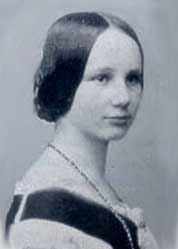
Today is Ada Lovelace Day, when we celebrate the achievements of women in science and engineering. I am not a scientist or an engineer, but I do work in an industry that’s overwhelmingly male-dominated at every level, and one thing Ada Lovelace Day tries to do is to encourage more women into those spheres which are traditionally occupied by men. I have met women software engineers over the years, but I’ve only worked with three or four, as opposed to dozens of men – and that includes my spells at large, forward-looking, right-thinking organisations of the kind you might hope and expect would encourage a more equal gender split.
It’s too late for me: I can look at code and understand (sometimes) what it’s doing, but I’ve tried to learn to write it and I hit a mental block that goes: this is silly, [whoever I’m sitting nearest] could do this much faster and I could get on with the stuff I’m actually good at. But the only reason [whoever is sitting nearest] is faster and better is that he started doing it when he was a teenager, and has been learning ever since. So if you have, or know, or are, a teenage girl, get to it now! There are lots of places to start: school is probably one of them, and there’s also Code Academy which seems to work for lots of people (I confess, I got stuck on week three, but don’t take me as a guide), and a whole internet full of free lessons on everything. I would love it if, in twenty years’ time, we could get to the point where when someone says “I hired a new software engineer last week”, people would be shocked if someone said (as they always do) “Oh yeah? Who is he?”
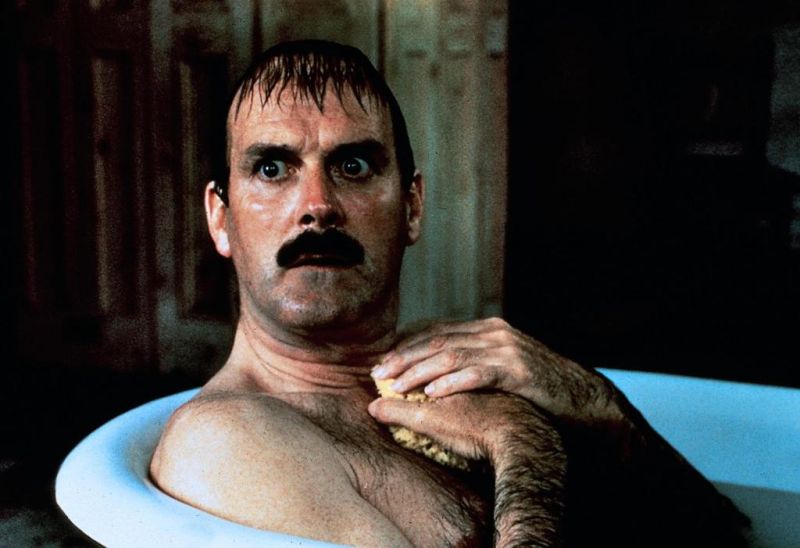
There is almost no situation in which this picture isn’t appropriate
I had a bath this morning, which is very unusual on a weekday but I was cold and aching from running in the rain a couple of evenings before, and – well, frankly, I wasn’t ready to be vertical.
Having a bath meant I listened to the Today programme, which most mornings I don’t any more, and listening to the Today programme reminded me why I don’t any more. I can’t have listened for more than 15 minutes but in that time it made me feel quite separately cross about three things, and I came out of the bath less relaxed than I’d gone in, which is all wrong. So to make me feel better, I’m going to make you cross about them too.
NUMBER ONE. John Humphrys exclaiming that nobody in authority had shouldered the blame for the child sex abuse gang uncovered in Rotherham last year. Nobody, that is, apart from the PERPETRATORS WHO WENT TO JAIL. I can’t bear the journalistic tendency to assume that when vulnerable people are harmed, it’s social services’ fault, as though the social care system isn’t full of desperately overworked and underfunded people trying as hard as they possibly can to stop people from coming to harm. Do the job yourself, Humphrys, and live on a social worker’s salary for a year, then start blaming them for organised criminal activity.
NUMBER TWO. David Cameron, on Letterman last night, was asked what “Magna Carta” meant, and apparently didn’t know the answer. Now, I didn’t know the answer either, but I know what Magna Carta is, and I speak English which means I can understand some Latin, so I was able to work it out. If I can do it, bloody David Cameron should be able to. I knew he was stupid, but I didn’t think he was stupid.
NUMBER THREE. A piece on Jamie Oliver’s new 15-minute dinners book, in which the nonsense argument was made for the sake of controversy where none existed (this technique will be familiar to regular listeners) that the target audience for the book was owners of Jamie’s earlier 30-minute dinners book, and good grief, were we really so desperate for time that we needed to claw back another fifteen minutes in the evening, and what was wrong with spending an extra quarter of an hour doing something useful and enjoyable like cooking? Somebody (I have no idea who was being interviewed about it, except that none of them was Jamie Oliver) tried to make the OBVIOUS POINT that the book is aimed at people who don’t cook at all, and not at people who already enjoy cooking, but this was shouted down in the general frenzy.
I think tomorrow I shall return to comforting silence.



 Glad All Over