I am cross with myself. I am cross with myself because when Davy Graham died three years ago, I decided I would make a conscious effort to go and see all the musicians I love best who I’ve never seen live and who won’t be around forever. High up on that list was Bert Jansch. I could have seen him performing with Pentangle at Glastonbury, but it clashed with something else, so I didn’t. And I could have seen them at the Festival Hall in August, but I had promised to go and see a friend’s band that night, so I didn’t.
And now Bert Jansch has died, and I could have seen him, and I didn’t, and now I never will. What an idiot. Here’s what I missed:
I am going to make a list, now, today, of people to see before they, or I, die. And I am going to post it here, and if you see any of them coming to London, please shout at me and tell me to go and see them. And if I say I’m busy that night, tell me I’m an idiot.
Via Journal du Geek (in French), here’s a lovely ad for a new Japanese (of course) mobile phone with a wooden back. It’s worth watching, I promise you:
I don’t usually listen to music on the way to work. I read, or look out of the window; music seems a little too invasive and involving for that time in the morning. But today – with the sun out and the weekend looming – it felt like a day for music.
I put the iPod on shuffle and the first song it played me was the Magnetic Fields’ Busby Berkeley Dreams, which, as it turns out, is a terrible song to listen to on the bus, especially if, like me, you cry at the drop of a hat and happen to be wearing mascara. Fortunately I was also wearing sunglasses, so I think I got away with it.
Unrelatedly, I went to see the Pet Shop Boys’ ballet this week, and it has a stunning section in the middle which includes a kaleidoscopic dance, where bodies stop being bodies and become synchronised parts of a mesmerising machine. Of all the performing arts dancing is the one I understand the least, but sometimes it can be transfixing and transporting in a way that nothing else is.
Anyway, some dude on the internet has put together a video sequence to accompany the song, and since I can’t share the ballet with you this is the next best thing, just as long as you have your hanky at the ready:
I can vividly remember the first time I heard Carter the Unstoppable Sex Machine. I was fourteen years old, it was late July, or maybe early August, and I was in a field in Wales. I was at a church camp (I’m Jew-ish, but it’s complicated) where every minute of every day was filled with activity, but for some reason there was nowhere we had to be just then; and somebody – probably Marsha, who would go on to make a career out of introducing people to new music, but maybe her impossibly cool older brother – had smuggled in a cassette player, and into the hazy afternoon sun snaked the crashing chords of Prince In A Pauper’s Grave. My tiny mind was blown. It was the most exciting song I’d ever heard.
So when I got home I taped someone’s copy of 30 Something and listened to it obsessively until the following year, when 1992: The Love Album came out at almost exactly the time I met my first ever boyfriend. By the time the relationship ended three months and four days later, I knew all the words to every song. It was a heady time.
That autumn I got a Saturday job at the hippie stall. The hippie stall probably had another name for trading purposes, but I never heard anyone call it anything else. It was run by Pam and Martin, a proper hippie couple, and they hired a series of schoolgirls attracted by the subversiveness of selling candles and incense in the middle of Bromley, where everybody else sold curtains and lampshades.
I worked the morning shift. One day I was early, so I hung around listening to my walkman while I waited for Pam and Martin to arrive. When their beaten-up old van lumbered up, I took my headphones off. Martin got out of the van.
“What are you listening to?”
I hesitated. Martin could be witheringly sarcastic, in a way that was breathlessly funny if you weren’t the target, but less so when you were.
“Carter the Unstoppable Sex Machine.”
“Oh yes, I’ve heard him. Very good at playing his…machine, isn’t he?”
It’s not a him, it’s a them, I wanted to say, but I didn’t. They play guitars as well as machines, I nearly said, but I didn’t. What’s wrong with making music on a machine?, I should have said, but I didn’t.
I expect I just shrugged, not realising then that casual dismissal of something I thought heartstoppingly good was to be a standard reaction from other people for years to come. When I went to HMV in Bromley to queue up to meet Johnny Rotten and have him sign a copy of No Irish, No Blacks, No Dogs, I was careful not to mention it to Martin. I knew his limits.
Nobody ever liked the music I liked, so in later years I learned to like the music other people liked, and my CD rack grew heavy with albums by Blur and Pulp and David Bowie and the Rolling Stones. And I do like them all. But I didn’t find them for myself, and I bought their albums because it was something people did. Carter will always hold a special place in my heart because for a little while they were only mine. (Secretly, I still think they are.)
Which is mad. Everybody should listen to them. They are brilliant. The tunes are brilliant, the arrangements are brilliant, the energy is brilliant, the words, especially, are brilliant: witty, biting statements against the world interspersed with moments of melancholy and occasional whimsy, firmly set in an all too recognisable South London, and sung in a rough diamond, devil-may-care voice that you recognise in an instant.
I was an orderly, list-making sort of a teenager. 1992 was the best album. Prince in a Pauper’s Grave was the best song. Suppose You Gave a Funeral And Nobody Came was the best song title. The best lyric, from My Second To Last Will And Testament, was perfect in its simplicity:
The genius of their lyrics was always in taking the banal and the familiar and twisting it into something new. Rubbish contained a reference to Elmers End. I lived in Elmers End. Nobody lived in Elmers End: it was tiny, and people from five miles away had never heard of it, but this band, my band, had made it famous.
I learned to draw the red-and-white band logo, and I traced it carefully across my bedroom wall, over the back pages of notebooks; on to the canvas flap of my school bag. The hardest part was making sure the words “The Unstoppable Sex Machine” were centre-aligned in relation to “Carter”. You had to start with the “Unstoppable”, halfway across the “A”, and work outwards from there.
(Other logos I have obsessively drawn: the grafitti spray of BAD from the Michael Jackson album; the clenched fist of the Socialist Worker Student Society.)
But nobody liked the music I liked, so I never went to see them play live, because I could never find anybody to come with me. And they’ve played a few reunion gigs over the years but I’ve somehow missed them all, and when they announced “big news” a couple of weeks ago I knew they were going to be back again, but the London show is on our wedding day, and we’re getting married in Dublin, and even if we were getting married at home I don’t think I could get away with leaving the reception to go to a gig.
(Could I?)
So maybe I’ll never get to see them, and although that breaks my heart a little bit, it also lets me persevere with the delusion that their music belongs to only me. So I’ll keep listening to them through headphones and squirming with secret delight at every delicious angry joke. I might tell people I’m listening to Radio 4, if they ask.
Should you happen to be charged with choosing music for my funeral, however, I have a suggestion. You needn’t go with it, because I’ll be dead so I won’t care, but at sixteen I decided that I wanted to be waved off to the sound of the last two songs from 1992; Skywest and Crooked and The Impossible Dream (they always did cover versions better than anyone else, better than the originals), and I’ve never found a reason to change my mind:
This summer will mark the twentieth anniversary of that day in a field in Wales. Crystal Palace Football Club is the only entity I’ve loved for longer, not counting actual people, but football’s different because it causes at least as much pain as joy, especially if you support Palace. When you find a band you love, though, your life gets uncomplicatedly better, which is why music is better than football.
Now, excuse me while I go and turn up the stereo really loud.
I dunno. You wait ages for a post-watershed sitcom about a Jewish family starring a well-known Simon, then two come along at once.
In case you haven’t seen them, the two sitcoms in question are Grandma’s House, starring non-actor Simon Amstell, which went out towards the end of last year; and Friday Night Dinner, starring, frankly, non-actor Simon Bird, which started this weekend. I liked Grandma’s House a lot; nothing ever really happened, but it made me laugh, and its matter-of-factness felt real, even though the characters were caricatures. And everyone except Simon Amstell could act, and Simon Amstell not being able to act was sort of part of the joke, so it was OK.
And I liked Friday Night Dinner, too. It had more proper laughs than Grandma’s House, and the wonderful Mark Heap who is such a brilliant physical clown that I could just watch him moving around silently for half an hour. And Simon Bird plays his likeable self, which is just as well. Had I seen it without seeing Grandma’s House, I would have given it a resounding thumbs up, if gestures can resound, which I suspect they can’t.
But they are really, really startlingly similar! The characters in Grandma’s House may be more overdone than in Friday Night Dinner, but they are, fundamentally, the same characters. There is a Simon (although he’s called Adam in Friday Night Dinner); his irritating younger relative (Jamal Hadjkura in Grandma’s House and Tom Rosenthal in Friday Night Dinner); the married couple whose house it all happens in, who are fond of one another deep down but can’t help squabbling (Geoffrey Hutchings and Linda Bassett/Paul Ritter and Tamsin Greig); the overbearing and dowdy Jewish mother whose main occupation is nagging at the rest of her family (Rebecca Front and Samantha Spiro both play this character in Grandma’s House; in Friday Night Dinner it’s still Tamsin Greig), and the weird outsider who turns up halfway through each episode and unsettles everybody (James Smith/Mark Heap).
Coincidentally, in each case the overbearing mother and the weird outsider have also jointly starred in an earlier sitcom (The Thick Of It and The Green Room, respectively), but that really must be down to chance. Well, of course it’s all down to chance – the creators of Friday Night Supper must have had their scripts complete and ready to go, if not filmed, by the time Grandma’s House aired – but the two are so very alike that I almost wonder why, having seen Grandma’s House, they didn’t go back and rewrite.
But I’m not really complaining; as I said, I am delighted to be able to watch a Jewish sitcom that isn’t Seinfeld, and I like both programmes a lot (although I’ll like them even better if they manage to introduce a comedy Jewish woman who doesn’t look like a 1970s Geography teacher). And anyway, there’s only been one episode of Friday Night Dinner, so it’s a bit early to judge. If episode six is set on an aircraft carrier and Simon is fighting Godzilla, I promise I’ll eat my words.
I bought two pairs of trousers this week. I don’t very often wear trousers, but I was inspired by this article by Jess Cartner-Morley, the only fashion writer whose advice it’s actually possible to follow, and by Patricia Arquette’s character in Medium, Allison Dubois, who is my office-wear muse because she always looks effortlessly elegant even though she hardly ever gets any sleep and saves someone’s life nearly every week. And she almost always wears trousers. Of course, there isn’t a single photo on the internet where you can see her bottom half, so you’ll just have to take my word for it:
So I bought some trousers. I’ve just remembered that the other reason was because last weekend I bought this top in the Dust sale:
(It looks really drab on the internet, doesn’t it? It’s nicer in real life)
And I thought I needed some trousers to go with it. Trousers or a pencil skirt, but I am even less a pencil skirt wearer than I am a trouser wearer.
So trousers it was. I bought a brownish pair, which goes with the top and anything vaguely warm-toned, and a greyish pair, which I am wearing today with a pale grey polo-neck vest and a grey striped sleeveless shirt. I am a vision of colourlessness.
Anyway, I like the trousers. They are flattering and comfortable and they broaden my work wardrobe by a much higher factor than the simple addition of two new items of clothing. HOWEVER, who designed the fastenings on smart trousers? Both pairs have
A button
Three hook fastenings
A zip
A belt
Are work trousers more inclined than most to fall down inopportunely? Or is it just that it’s more embarrassing if your trousers fall down at work than if it happens elsewhere, when you would just laugh it off? I cannot imagine circumstances in which a zip and a belt, or some buttons and a belt, wouldn’t have sufficed.
That aside, I am enjoying my new status as a trouser-wearer. But I still don’t know why anyone would wear them for fun.
I like QI. I like Stephen Fry, and I like Alan Davies – or at least, I like the version of Alan Davies that appears in QI – and I like the format. I like most of the guests, with honourable exceptions for Jeremy Clarkson and Rory McGrath. I especially like Rich Hall. And I like it when they get slightly unexpected people in for a one-off. After all, the only qualifications for being on QI are that you are (a) fairly well-known and (b) not stupid. Right?
Well, sort of. The problem is that using those criteria you might expect to end up with a roughly equal gender split, and QI has never had that. I have just, because I am a serious and dedicated blogger, had a look at the complete guest list for every episode ever of QI, and I have discovered, to my disappointment but not to my surprise, that there has only ever been one episode broadcast which featured more than one female guest, and that that episode was one in series D whose subject matter was “Domesticity”. Ahem.
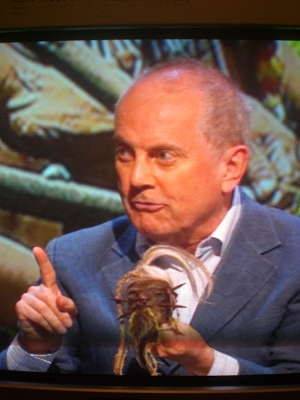
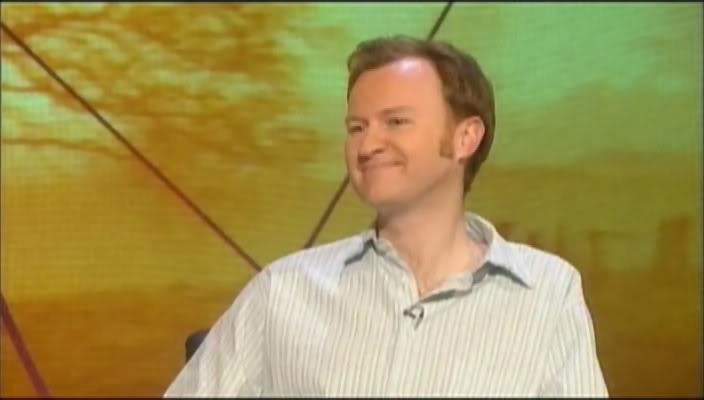
I know all the arguments about why there are more male than female comics. I even agree with some of them, like the one about the level of competitive blokery prevalent on the club circuit, which is where most comics start from. But QI isn’t limited to comedians. It has featured DJs:
composers:
politicians:
and writers:
…as well as countless actors and presenters. You could describe these people as wits, but they’re not comedians. And there are plenty of bright, witty women around. Some of them are even comedians. I’m pleased to see Sandi Toksvig and Sue Perkins cropping up more frequently in recent series, and I would happily watch Jo Brand every week, but if Daniel Radcliffe can be invited on, where are Josie Long, Victoria Coren, Mariella Frostrup, Shappi Khorsandi, Miranda Hart, Sally Phillips, Lucy Porter, Sarah Millican, Julia Davis and Tamsin Greig? Where, for that matter (if you’re going to have John Sessions and Rory Bremner), are Dawn French, Jennifer Saunders, Joanna Lumley, Victoria Wood, Alison Steadman, Caroline Quentin and Patricia Routledge?
I can only assume that they’re scared that an all-female panel, or even a mostly-female panel, will be cleverer and funnier than the men-only shows. I have a sneaking suspicion that they’re right.
Me and my brother and sister have a game. It’s called “In… what… waaaay” in honour of Ferris Bueller’s Day Off, although it doesn’t really deserve a name of its own, because it’s just “guess the movie I’m quoting”. But we’ve seen all of the same movies, so it’s more fun to play than it would be with random strangers.
Anyway, there are some films, Ferris among them, which almost aren’t worth using any more because we all know them so well, which means that if you can come up with a line from one of those films which the other two don’t immediately recognise, you are definitely the winner of that round.
In a separate development, I am really enjoying my new job. Really enjoying it. Put those two facts together and maybe it’s not that strange that last night I dreamed that my actual job was coming up with movie quotes for people to guess. As the alarm went off at seven o’clock this morning, I was gleefully reciting the line “that’s the bedroom…but nothing ever happened in there”* and waiting to see who’d guess it first. I can’t remember who was doing the guessing, but – as when we play it for real – it was all very jolly and uncompetitive.
I’m pleased that my brain chose to associate my new job with playing “In… what… waaaay”. I think it bodes well.
Some of my dreams are interesting and many are definitively not. The most interesting dream I’ve ever had, which I can still conjure up perfectly vividly even though I dreamed it in 1992, is a story for another day. The second-most interesting dream was a nightmare which still sends shivers down my spine, although it’s one of those nightmares which don’t sound scary at all when you describe them. I’ve never been able to interpret either of them in a way that made sense, so perhaps I will write about them here one day and see if someone else can do better.
In general, though, I’m not a very cryptic dreamer: most of what I dream about is a perfectly transparent reference to whatever I’ve mostly been thinking about that day. Here are three examples:
1. When I’d been at the Guardian about eighteen months, I was asked to take on a much more technical job than I’d ever done before. It was still project management, but it involved knowing about servers and back-end systems and other things I didn’t really understand. These were projects on which the website would literally stand or fall. In the days before I started, I dreamed that we were all riding in a giant bus, which was being driven jointly by our Chief Technical Officer and our Systems Administrator. At a crucial moment, they asked me to come forward and drive the bus. As I took over the steering wheel, I swerved it violently to one side and crashed the bus into the verge.
2. A couple of years later, I was helping to run a survey of people’s favourite films by collecting lots of data and sending it to a friend, who was mashing it up and turning it into something interesting. Midway through, I dreamed that the friend in question was a private detective (in the dream he was also Sherlock Holmes, and I was Watson) and he’d called me into his office to help with an assignment. “I need you to gather some information”, he said. “I need you to go out and find every example you can of the anthromorphisation of letterboxes in nineteenth-century English literature.”
(I guess my subconscious added a flourish of its own there.)
3. Shortly after the beloved and I became engaged, I dreamed that we were in a large room full of people we knew, eating a meal. Our table was at one end of the room and we were facing out towards everybody else. Our chairs were eight or nine feet tall, and we’d had to climb ladders to reach them. As the meal ended I looked down and realised that the ladders had been removed, and we had to stay in the chairs, with everybody looking at us.
No need for Freud’s help in interpreting any of those, I don’t think.
(On the other hand, the period in my life when I had the liveliest and most colourful dreams was while I was reading On The Interpretation Of Dreams before I went to sleep every night, which is an activity I strongly recommend if you can’t afford hallucinogens.)
*They’re both easy, but please go ahead and guess the source of each quote in the comments. It will make me very happy.
Festive frivolities have played havoc with my body clock, so I find myself wide awake at 6.30am on a Sunday while the beloved snoozes peacefully next door. I like this time of day, especially at the weekend: I like being awake when nobody else is and I like the idea that the day still holds unlimited possibilities. Mostly, I just like that it’s quiet, because on a crowded estate full of kids and drug dealers it’s almost never quiet. Even my typing sounds loud, and each time a car passes outside on the main road I can hear it from a long way away and I have time to wonder who’s in it, and where they might be going at this unlikely hour.
Anyway, being awake when I don’t need to be gives me the chance to write a post which has been percolating for months, or maybe years. I’ve shared my theory about The Phantom of the Opera at dinner parties and seen eyes glaze over and people quietly excuse themselves to go and hide in the bathroom until I’ve finished, so I think it’s only fair to bring it to a wider audience. If you find your attention wandering before I get to the end I suggest you go and read a book instead.
Put simply, the theory is this: the really interesting love story in the musical version of The Phantom of the Opera is not the story of the Phantom and Christine Daaé, but the story of Andrew Lloyd Webber and Sarah Brightman. There are some obvious parallels: genius composer with an unprepossessing appearance falls in love with beautiful young singer for whom he holds an unexpected fascination. She is in his power for a while, but ultimately they must part.
When the Phantom discovers that he has a rival for Christime’s affections he laments:
He was bound to love you When he heard you sing
which I think is about as close to a personal declaration of love from the composer to his leading lady as you can get.
In the original novel there is no suggestion that Christine loves the Phantom; she is frightened of him and desperate to escape his clutches and return to her true love, Raoul. The musical is much more ambiguous – compare and contrast publicity images for an early film adaptation of the book:
And the stage show:
I think that when Andrew Lloyd Webber wrote The Phantom of the Opera what he was really writing was history’s most extravagant love letter. In Love Never Dies, the follow-up, Christine’s love for the phantom is reaffirmed, and we even learn that, contrary to the fairly well established plot of the original, he rejected her the last time around:
The Phantom
And when it was done, Before the sun could rise Ashamed of what I was Afraid to see your eyes. I stood while you slept And whispered a goodbye. And slipped into the dark Beneath a moonless sky.
Christine
And I loved you, Yes I loved you. I’d have followed any where you led. I woke to swear my love, And found you gone instead.
But that’s OK, because, ahem, love never dies, you see, so it doesn’t matter that they’re not together any more:
Love never fades Love never falters Hearts may get broken Love endures
So yes, perhaps the Phantom ran away before Christine could tell him she loved him, and well, perhaps Andrew Lloyd Webber met his third wife before he’d strictly moved on from the second one*, but love endures. And if the Phantom and Christine really are Andrew and Sarah then there is something rather beautiful and moving about the revisiting of the story many years later. I don’t want to give away the story of Love Never Dies in case someone bought you tickets for Christmas, but you could, if you were so inclined, read it as a loving goodbye to something important, and if that’s what it is then Lloyd Webber has followed up his expensive and extended love letter to his wife with an equally extended and expensive letter of farewell to her, which is charming, and something that only he would have the chutzpah and the wherewithal to do.
*I read a brilliant story once about Andrew Lloyd Webber introducing his third and current wife, Madeline, to someone and referring to her as “Sarah” throughout the conversation. Apparently she was unfazed by it. I like to think that Sarah was his muse and his inspiration but Madeline is his soul mate so knows she needn’t worry about Sarah. It’s possible I have spent too much time considering the love life of Andrew Lloyd Webber.






 Glad All Over