
Kebabs

I’m not very good at barbecue food. I’m not very good at meat in general, and I’m especially not good at meat that comes in big greasy hunks, with bones and fatty parts still attached. And although I like sausages, I prefer them gently and evenly cooked through rather than burned to a crisp (and still pink on the inside), a phenomenon which only the very skilled barbecue chef seems able to avoid.

So whenever I’m invited to a barbecue, I bring kebabs, because the best way to get food evenly cooked is to chop it up small, and because even if you don’t like one of the ingredients, it’s not long until you get to the next one. I quite often do veggie kebabs, but this weekend we had some chicken pieces in the freezer and a chorizo in the fridge, so I made about a dozen spicy chicken and mushroom kebabs, and about a dozen halloumi and chorizo.

The easiest way to get grilled vegetables wrong is to let them dry out, so I started by chopping two red onions, two orange and yellow peppers and a handful of what I think were portobello mushrooms, pouring a couple of tablespoonfuls of olive oil over them, adding a liberal amount of pepper and slightly less salt, and stirring it all together.

(Courgettes are another good addition, but I had used up all our courgettes the night before, making a lovely simple grated courgette and lemon zest sauce for pasta courtesy of a proper food writer, the recipe for which I can’t find now but will link to once I’m able to dig it out.)

The halloumi and chorizo kebabs were easy: I just alternated the cheese and meat with pieces of onion and pepper – the important thing here is to make sure the components have a similar density, so they cook at about the same time. And use slices of onion, not chunks, or the insides will make your eyes water.

I cut the chicken into 3cm pieces and marinated them for a couple of hours in an adapted version of a recipe from Nigel Slater, where you mix groundnut oil (I used pistachio oil, because it was the closest I had), chillis, paprika, spring onions, runny honey (I used maple syrup), lemon juice and crushed garlic, and coat the chicken in it.

I soaked the skewers in cold water for as long as I could before I made up the kebabs, which just about stopped them from catching fire, and I transported the whole thing on a plastic tray which I bought at our local Costcutter, having realised too late that I had nothing big enough to put them in:

kebabs
Phone photo, hence the slight haze. Must buy a camera.

One tip: halloumi can be quite crumbly when it’s uncooked, and it’s easy to split it when you skewer it. I found it helped if I stabbed it very quickly and firmly, rather than trying to do it gently.

They need cooking for about five minutes on each side, although there’s nothing in the non-chicken ones that will do you any harm if they’re a bit underdone. Colourful, flavoursome and easy to share with newfound friends, they beat a burnt sausage any day.

A summery sausage supper

I don’t know what it’s like where you are, but here in WC2 the weather has been beautiful for the last few days, so when I suggested sausages for dinner last night, mashed potatoes and onion gravy didn’t feel like quite the right accompaniment. I googled “side dishes” and trawled through the results for inspiration, and eventually decided on a potato salad with gherkins and coleslaw.

Potato salad and coleslaw are things you can easily buy in the shops, but they’re usually gloopy with too much mayonnaise, so I plumped for a halfway house, making the potato salad from scratch but buying the coleslaw from a local deli, in the best tradition of the lovely Nigella.

Potato salad can have just about anything you like in it – the only essential ingredient is the new potatoes. For this one I added a finely-chopped raw shallot with fresh parsley and a dressing made from equal parts olive oil and white wine vinegar, with a dollop of Dijon mustard and a dollop of runny honey. I’d use a bit less vinegar than oil another time. Pour the ingredients together in a tumbler and whip them up with a fork into a paste, then pour that over the potatoes, shallot and parsley and stir.

Potato salad is nicest when it’s still slightly warm, so I made the salad first and then let it cool for just as long as it took to grill the sausages. We had a mixture of Toulouse and smoked sausages last  night, but just use your favourites. Add a spoonful of coleslaw and a gherkin and you have a meatily flavoursome summer supper for almost no effort at all.

Since (mostly) giving up booze I have been experimenting to discover which soft drinks go best with different kinds of food. My most exciting finding so far is that ginger beer is an excellent substitute for dessert wine. The ideal non-alcoholic companion to this meal is, I think, a nice cloudy apple juice.

On this weekend’s menu: hot cross buns, Easter chocolate and the rest of the wedding cake tasters that we brought back from Dublin at the weekend. It’s a tough gig but someone’s gotta do it.

Bread

There’s something fundamental about bread, if you live in the west. For all the whinging about carbs, we all know that bread is the stuff of life, which is why I always bake it when people are ill, or have a new baby, or are bereaved. Bread is sensible and practical and delicious. If I had to live on one foodstuff, it might be bread.

This recipe is for my mum’s bread, which means it’s older than I am. Here is my mum:

Mum

When I tried to get her to write the recipe down a couple of years ago she didn’t know any of the quantities, so she just gave me the list of ingredients and told me to experiment until I worked out how much of everything to use, which means I don’t know any of the quantities either. But the good news is, it doesn’t much matter: every single one of my experiments produced an entirely edible loaf.

This is a really dark, moist, flavoursome bread: as a child desperate for white sliced bread I used to try to avoid it, but now it’s one of my favourite things to eat. There are only two of us at home so I tend to make a smallish loaf, but you could up the quantities if you wanted to.

Ingredients

1lb wholemeal bread flour

A biggish dollop of molasses or black treacle

A handful of caraway seeds

Lukewarm water (less than half a glassful to begin with – you can add more as you, ahem, knead it)

A biggish pinch of dried yeast

Method

Pour all the ingredients into a large bowl and mix them with your hands until you have a ball of quite sticky dough. Cover the bowl with clingfilm or a tea towel and leave it somewhere warm for 30-60 minutes, or until the dough has roughly doubled in size (but don’t worry if it doesn’t expand that much – as long as it has perceptibly risen by the time you put it in the oven, you’ll be OK).

Grease the inside of a 1lb bread tin and transfer the dough into it. It doesn’t matter if it doesn’t sit perfectly level in the tin; wonky edges are part of the charm of home-made bread. Put the tin in an oven preheated to around 200 degrees for twenty minutes, then turn down the oven to 160ish for another half an hour.

(You might want to fiddle with those temperatures and timings depending on your oven: mine is a fan oven, so increase one or the other if yours isn’t. Turning the temperature down partway through cooking seems to prevent the crust from becoming too tough.)

After around fifty minutes, take the bread out of the oven and tip it out of the tin (you may need to employ a knife here if the greasing hasn’t done its job properly, in which case try not to scrape the coating off the inside of your tin, or it’ll be even stickier next time). Tap the underside of the loaf with the edge of a knife or the back of a spoon: if it sounds hollow, it’s cooked. Leave it to stand on a wire tray (I use the grill tray because my bijou kitchen doesn’t have space for anything that isn’t multifunctional) for at least twenty minutes. Eat while still warm with salad and gooey French cheese for a perfect summer supper. Then toast it the next day for breakfast: you’ll need your grill (or toaster, if you are one of those people with space for a toaster) turned up high, because the moistness of the bread means it’s fairly resistant to heat.

Caroway seeds are Mum’s original flavouring and are great, but you can experiment with other additions: black onion seeds, for example, give it a lovely hint of fire. I’d like to try it with dried chillis, too, but I haven’t gotten around to that yet.

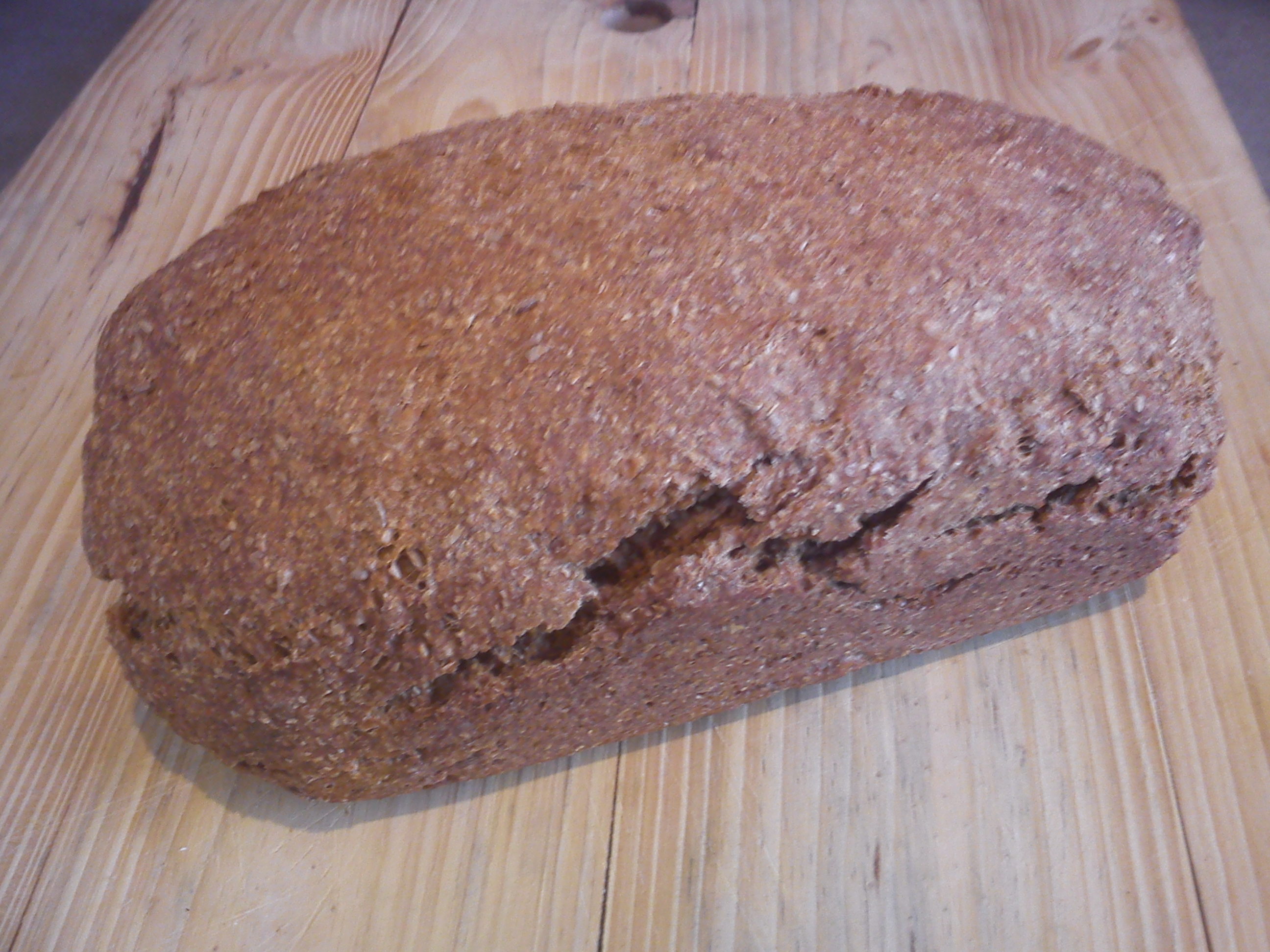
Here’s this morning’s loaf:

Loaf of breadTip: slice it thinly, because it’s heavier than your average loaf of bread, so a little goes a long way.